v2.0Current version
PublishedEffective dateRelease date
Implementation Monitoring Procedure
Document Summary
This document sets out the process for the Market Facilitator to conduct Implementation Monitoring.
This document sets out the process for the Market Facilitator to conduct Implementation Monitoring.
The Publish Date and Implementation Date form part of the legal baseline for this Governance Document and shall be taken as the effective dates for the purposes of interpretation and version control.
In the event of any discrepancy between the dates stated above and those referenced in any accompanying publication, metadata, or communication, the dates recorded in this Governance Document shall prevail.
For the avoidance of doubt, the Implementation Date represents the date on which the obligations, rights, and procedures set out in this Governance Document take operational effect.
The purpose of this Governance Document is to set out how the Market Facilitator conducts Implementation Monitoring, including verifying whether System Operators have implemented and are complying with the Flexibility Market Rules, monitoring and assessing the effectiveness of those Flexibility Market Rules using the Flexibility Market Information collected in accordance with this Procedure, and managing any issues that arise through engagement, escalation, and resolution processes.
Each Flexibility Market Rule defines the information and data that System Operators must submit to the Market Facilitator. This includes:
information required to evidence the implementation of that Flexibility Market Rule;
any data necessary to support the Effectiveness Monitoring of that Flexibility Market Rule once implemented, including data relating to metrics, success criteria, or expected values; and
information needed to maintain the Flexibility Market Catalogue, including Sub-Market definitions and updates.
The Market Facilitator will also collect additional Market Information to support its wider responsibilities, including:
informing its Strategic Leadership function;
supporting Effectiveness Monitoring;
identifying emerging issues, trends, or barriers in the operation of Flexibility Markets; and
determining whether changes to existing Flexibility Market Rules, or the development of new Flexibility Market Rules, may be required.
This Procedure applies to all Flexibility Market Rules and all System Operators to whom those Flexibility Market Rules apply. It sets out the following components of Implementation Monitoring:
Implementation Tracking and Reporting – validating whether Flexibility Market Rules have been implemented in accordance with their specified timelines and requirements, and identifying risks of non-compliance.
Escalation and Resolution Management – managing the process for addressing risks of non-compliance, including engagement with System Operators, operation of the Tier 1, Tier 2 and Tier 3 Escalation stages, and tracking any associated Resolution Plans and corrective actions to ensure issues are addressed in a timely and transparent manner.
Effectiveness Monitoring – evaluating whether Flexibility Market Rules are achieving their intended outcomes, using the metrics, success criteria, and other measures defined within the Flexibility Market Rules, and drawing on the relevant Flexibility Market Information.
Flexibility Market Catalogue Management – maintaining and updating the Flexibility Market Catalogue information, including Sub-Market definitions submitted by System Operators, ensuring accuracy, consistency, and transparency.
Additional Market Information Gathering – collecting quantitative and qualitative Flexibility Market Information from a variety of sources, including System Operators, other market stakeholders, publicly available datasets, and research or analysis undertaken or commissioned by the Market Facilitator.
This Procedure does not set or define the substantive obligations contained within the Flexibility Market Rules themselves. Those obligations are determined by the Flexibility Market Rules and any accompanying consultation or decision documents, in accordance with the Change Management Procedure.
This Procedure does not cover:
the setting of metrics, success criteria, targets, or reporting obligations for Flexibility Market Rules; or
the enforcement of licence obligations or other regulatory duties of System Operators (which remain matters for the Authority).
The main users of this procedure are:
Market Facilitator - The Market Facilitator is responsible for delivering Implementation Monitoring in accordance with this Procedure. This includes collecting and analysing Flexibility Market Information; assessing whether System Operators have implemented and are complying with Flexibility Market Rules; assessing the effectiveness of Flexibility Market Rules using the information specified within each Rule; maintaining the Implementation Tracker and the Flexibility Market Catalogue; managing engagement, escalation, and resolution processes; and publishing monitoring outputs and insights to support transparency and Strategic Leadership.
System Operators – System Operators shall provide all information and data required under each Flexibility Market Rule within the specified timeframes; submit and maintain Sub-Market definitions; provide Flexibility Market Information when requested; notifying the Market Facilitator where they may be unable to meet a Flexibility Market Rule requirement or schema requirement; ensure information submitted is accurate, complete, and timely; and engage constructively and in good faith with the Market Facilitator during Implementation Tracking, escalation, and resolution activities.
Stakeholder Advisory Board – The Stakeholder Advisory Board shall consider issues escalated to Tier 2 under the escalation process, provide advice and scrutiny to support transparency and robustness of Implementation Monitoring, and offer views on matters relevant to Effectiveness Monitoring and additional Market Information gathering, where appropriate.
Other Stakeholders – Other stakeholders (who are not System Operators) may provide Market Information voluntarily in response to Additional Market Information Requests issued under Section 3.7. Their participation may support Effectiveness Monitoring and Strategic Leadership.
The Authority – The Authority is the recipient of Tier 3 Escalations under this Procedure and may provide direction or guidance in accordance with its statutory functions.
The Market Facilitator shall deliver Implementation Monitoring through the processes set out in this Section. These processes ensure that Flexibility Market Rules are implemented in accordance with their requirements, deliver their intended outcomes, and are monitored and reported in a consistent and transparent manner. They are:
Implementation Tracking and Reporting - Verifying whether System Operators have implemented Flexibility Market Rules in line with the timelines and requirements specified in those Flexibility Market Rules, and identifying any risks to delivery. Progress shall be reflected in the Implementation Tracker.
Escalation - Managing cases where implementation or compliance with Flexibility Market Rules is at risk, including engagement with the relevant System Operator and operation of the Tier 1, Tier 2 and Tier 3 Escalation stages set out in this Procedure.
Resolution Tracking - Monitoring and tracking the completion of actions agreed through engagement or escalation, and updating the Implementation Tracker to reflect the status of any resolution activities.
Effectiveness Monitoring - Assessing whether Flexibility Market Rules are achieving their intended outcomes, using metrics, success criteria and other measures defined in those Rules, and drawing on Market Information collected under this Procedure.
Flexibility Market Catalogue Management - Maintaining an accurate and up-to-date Flexibility Market Catalogue, including the Sub-Market definitions submitted by System Operators, to support consistent cross-market analysis and stakeholder transparency.
Additional Market Information Gathering - Collecting and analysing Market Information from System Operators, other Stakeholders, publicly available sources, and research undertaken or commissioned by the Market Facilitator, to support Implementation Monitoring, Effectiveness Monitoring, and Strategic Leadership activities.
Where a System Operator identifies that it may be unable to implement a Flexibility Market Rule by the specified Implementation Date, or comply with any other requirement of a Flexibility Market Rule, it may submit a Derogation request in accordance with the Change Management Procedure. Where a Derogation is granted, the Market Facilitator shall reflect the effect of that Derogation in the Implementation Monitoring
Together, these processes provide a structured basis for monitoring the delivery, performance, and ongoing suitability of the Flexibility Market Rules.
This process sets out how the Market Facilitator conducts Implementation Tracking to verify whether System Operators have implemented Flexibility Market Rules in accordance with the timelines and requirements specified within those Rules.
As part of Implementation Tracking, System Operators shall submit their implementation status for each applicable Flexibility Market Rule and Sub-Market, including the target Implementation Date for that Flexibility Market Rule. Submissions must be made:
within the timeframe specified in the relevant Flexibility Market Rule following that Rule’s Published Date; or
within the timeframe specified in the relevant Flexibility Market Rule following any change in the System Operator’s implementation status.
The Market Facilitator shall review the implementation status submitted by System Operators and update the Implementation Tracker accordingly. Where the Market Facilitator identifies any of the following, it shall engage with the relevant System Operator in accordance with the Escalation Process set out in this Procedure:
A Flexibility Market Rule has not been implemented by its specified Implementation Date;
A System Operator may not be meeting the requirements of that Flexibility Market Rule; or
A System Operator is at risk of failing to implement a Flexibility Maret Rule on time.
Where the Market Facilitator and the System Operator agree actions to address issues identified through Implementation Tracking, progress against those actions shall be monitored and recorded through Resolution Tracking.
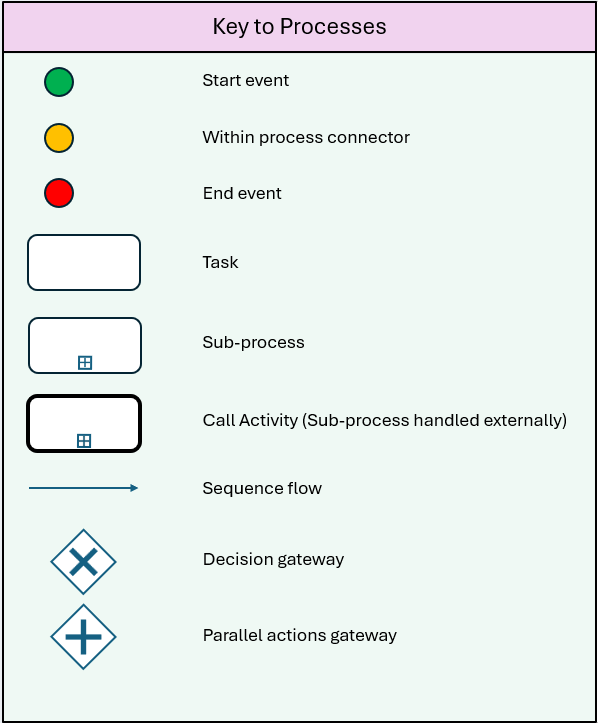
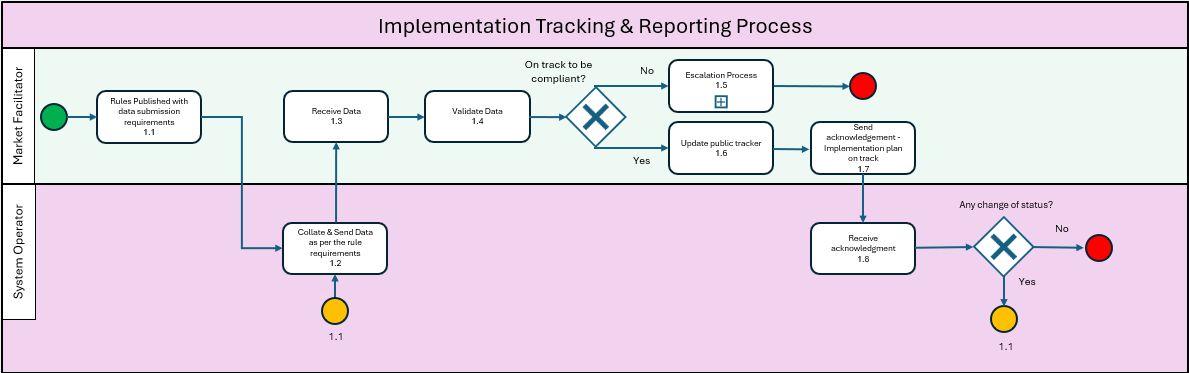
Figure 1: Key to Processes
Figure 2: Implementation Tracking & Reporting Process
This Process sets out the steps the Market Facilitator will take where it identifies that a System Operator’s implementation of, or compliance with, a Flexibility Market Rule is at risk or that an issue has arisen. This may include missed Implementation Dates, incomplete or missing data submissions, underperformance against effectiveness measures, or any other indication that the requirements of a Flexibility Market Rule or associated Market Facilitator Information obligations may not be met or are not being met.
Where a risk or issue is identified, the Market Facilitator shall initiate a Tier 1 Escalation by notifying the System Operator in writing, setting out the reason for the escalation, requesting a Resolution Plan, and confirming the date of the Resolution Meeting.
At the Resolution Meeting, the System Operator shall present a draft Resolution Plan, including the underlying root cause of the issue, proposed actions, key milestones, and any supporting information, or otherwise outline the content it intends to include. Following the meeting, the System Operator shall submit its proposed Resolution Plan for the Market Facilitator to assess.
The Market Facilitator shall assess the proposed Resolution Plan and determine whether to:
approve the Resolution Plan;
request further information or revisions to the Resolution Plan; or
escalate the matter.
The Market Facilitator may request one or more revisions to the Resolution Plan without escalating the issue. The Market Facilitator shall update the Implementation Tracker to reflect the status of the Resolution Plan and any actions underway.
Where the Market Facilitator considers that escalation is necessary, because the System Operator has not submitted an acceptable Resolution Plan after reasonable opportunity for revision, or because the existing Resolution Plan is not being delivered or is no longer viable, the Market Facilitator may escalate the matter to Tier 2 by referring the issue to the Stakeholder Advisory Board. The System Operator shall consider the advice provided by the Stakeholder Advisory Board and shall resubmit an updated Resolution Plan for the Market Facilitator to assess.
If, having considered the updated Resolution Plan submitted after Tier 2, the Market Facilitator determines that the System Operator has not submitted an acceptable Resolution Plan, or the System Operator is not cooperating with the Market Facilitator or the Stakeholder Advisory Board in progressing the issue, the Market Facilitator may escalate the matter to Tier 3 by notifying the Authority. Tier 3 Escalations shall be notified to the Authority on a non-public basis, and the public Implementation Tracker shall not indicate that the Authority has been notified.
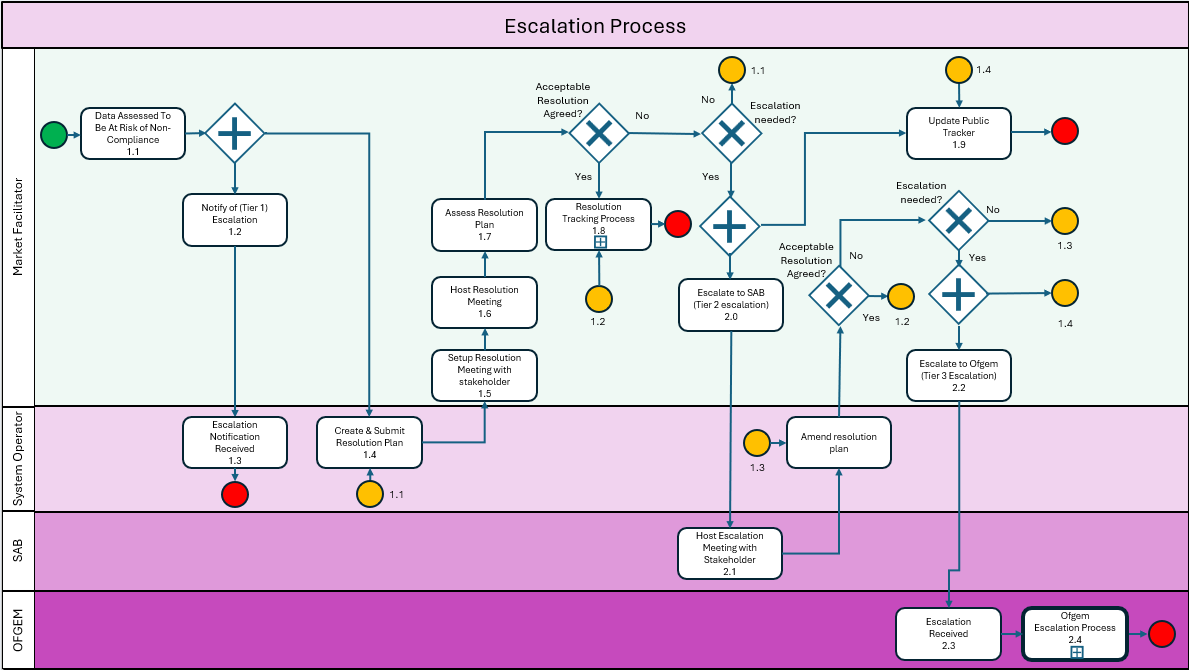
Figure 3: Escalation Process
This process ensures that any agreed Resolution Plans are actively monitored. Following an agreed Resolution Plan, the Market Facilitator will track the System Operator’s progress against the agreed milestones. The purpose is to ensure that corrective measures are implemented effectively and that the System Operator achieves compliance. Updates to the Implementation Tracker will reflect the status of the Resolution Plan and associated milestones, supporting transparency and accountability.
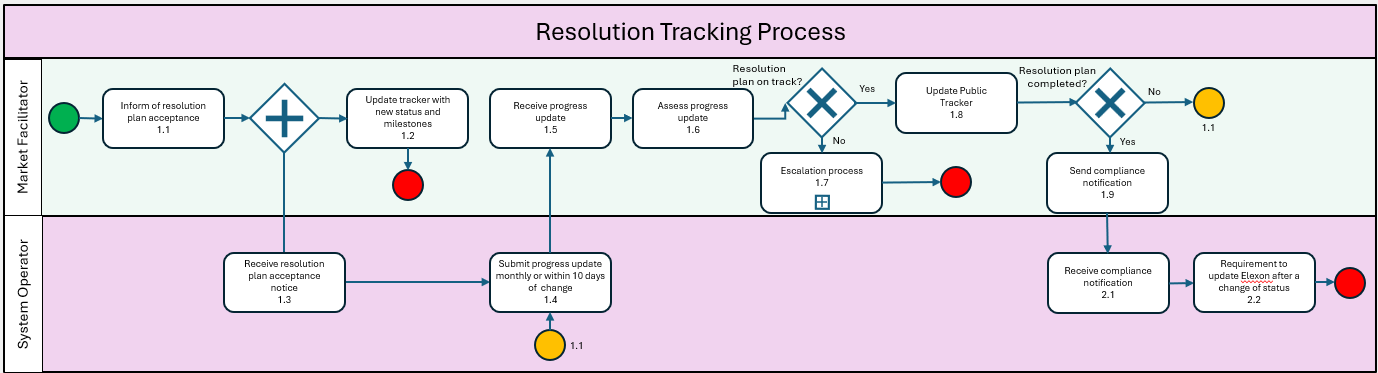
Figure 4: Resolution Tracking Process
This process sets out how the Market Facilitator maintains the Flexibility Market Catalogue. System Operators are required to submit Sub-Market definitions using the standard schema provided by the Market Facilitator, as specified in the relevant Flexibility Market Rule.
System Operators shall submit Sub-Market definitions:
no later than the applicable Implementation Date of the relevant Flexibility Market Rule, as may be varied by any approved Derogation; and
following any change to a previously submitted Sub-Market definition, within the timeframe specified in the relevant Flexibility Market Rule, as may be varied by any approved Derogation.
The Market Facilitator shall update the Flexibility Market Catalogue to reflect the most recent Sub-Market definitions and other information submitted under the Flexibility Market Rules.
Where the Market Facilitator identifies that information submitted by a System Operator is incomplete, inconsistent with the standard schema, or otherwise not aligned with the relevant Flexibility Market Rule, it shall engage with the System Operator to clarify or resolve the issue in accordance with paragraph 3.3.
System Operators shall also notify the Market Facilitator where they consider that they may be unable to meet the standard schema or any requirement relating to Sub-Market definitions under the relevant Flexibility Market Rule and shall provide the information necessary to support such notification. Any material deviations that indicate a risk to Flexibility Market Rule implementation or compliance may inform Implementation Tracking, Effectiveness Monitoring, or the Escalation process, as appropriate.
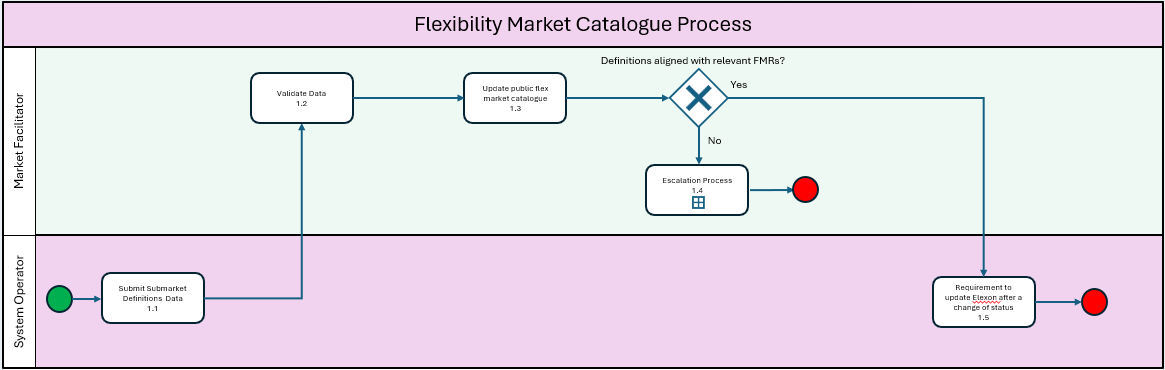
Figure 4: Flexibility Market Catalogue Process
This process sets out how the Market Facilitator requests and collects additional Market Information from System Operators. The Market Facilitator may request both quantitative information, such as service uptake, procurement volumes, and operational metrics, and qualitative feedback on rule usability, operational experience, and barriers to participation.
Information collected under this Process shall only be used to support the functions of the Market Facilitator.
Where a System Operator does not provide the requested additional Market Information within the timeframe specified in the request, the Market Facilitator shall engage with the System Operator to understand the reason for non-submission. Where the issue remains unresolved, the Market Facilitator may reflect the risk in Implementation Tracking and may escalate the matter in accordance with the Escalation Process in paragraph 3.3.
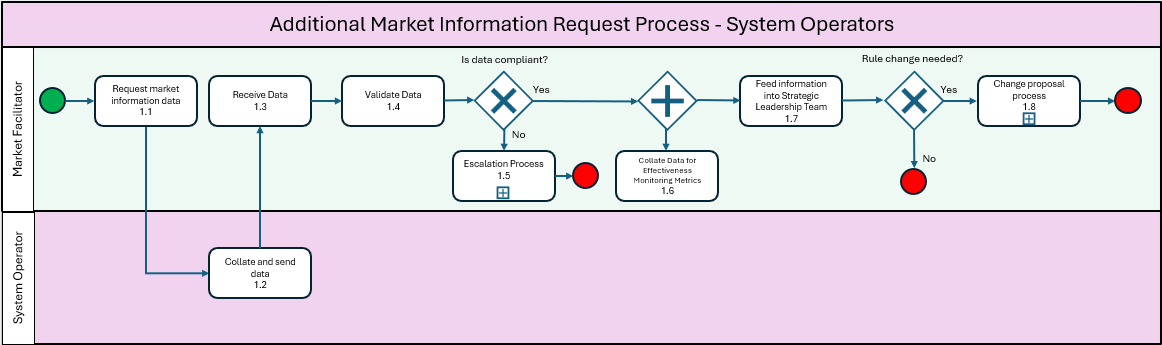
Figure 5: Additional Market Information Request Process - System Operators
This process sets out how the Market Facilitator may request and collect additional Market Information from stakeholders other than System Operators, including (without limitation) Flexibility Service Providers, technology providers, platform operators, community energy groups, innovators, and other stakeholders.
Information collected under this Process shall only be used to support the functions of the Market Facilitator.
Non-provision of information requested under this Process is not subject to the Escalation Process, and no adverse compliance or implementation status will be assigned to any non- System Operator stakeholder. However, the provision of such information is strongly encouraged, as it supports transparency, continuous improvement, and the effective operation of Flexibility Markets.
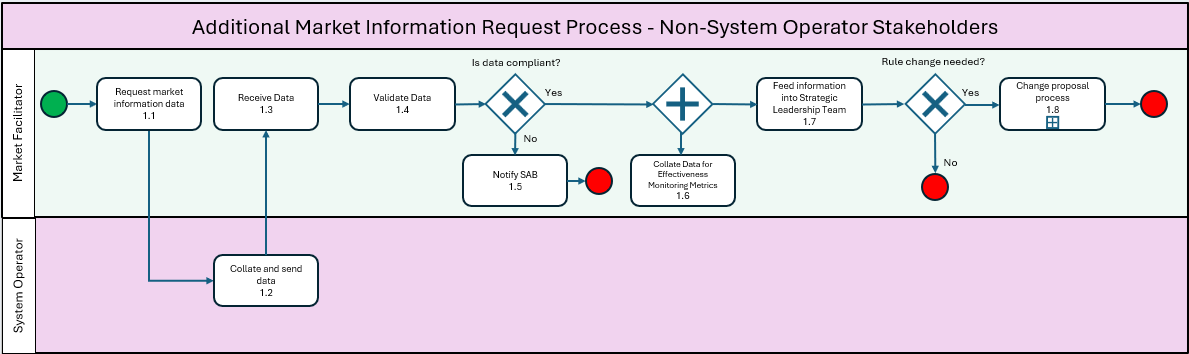
Figure 6: Additional Market Information Request Process – Non-System Operator Stakeholders
This Process sets out how the Market Facilitator undertakes Effectiveness Monitoring to assess whether Flexibility Market Rules are achieving their intended outcomes. The Market Facilitator shall use Market Facilitator Information, including information submitted under this Procedure, and any relevant publicly available data to carry out this assessment.
Where the Market Facilitator identifies that a Flexibility Market Rule is underperforming against its intended outcomes, metrics, or success criteria, and the issue relates to the design of the Flexibility Market Rule rather than its implementation, the Market Facilitator may initiate a review or raise a proposal for change in accordance with the Change Management Procedure.
Where the Market Facilitator identifies that a System Operator is not meeting the metrics, success criteria, or other effectiveness measures associated with a Flexibility Market Rule, and no Flexibility Market Rule change is required, the Market Facilitator shall treat this as a risk under the Implementation Monitoring framework. The Market Facilitator shall engage with the System Operator to understand the cause and may escalate the matter in accordance with the Escalation Process, where appropriate.
The Market Facilitator shall publish the Effectiveness Monitoring outputs specified within each Flexibility Market Rule, and shall do so within the timeframes defined in those Flexibility Market Rules. Such publications shall set out the performance of the relevant Flexibility Market Rules against their defined metrics and success criteria, and may include summaries of System Operator performance where required. The purpose of these publications is to support transparency for stakeholders on the outcomes delivered by the Flexibility Market Rules.
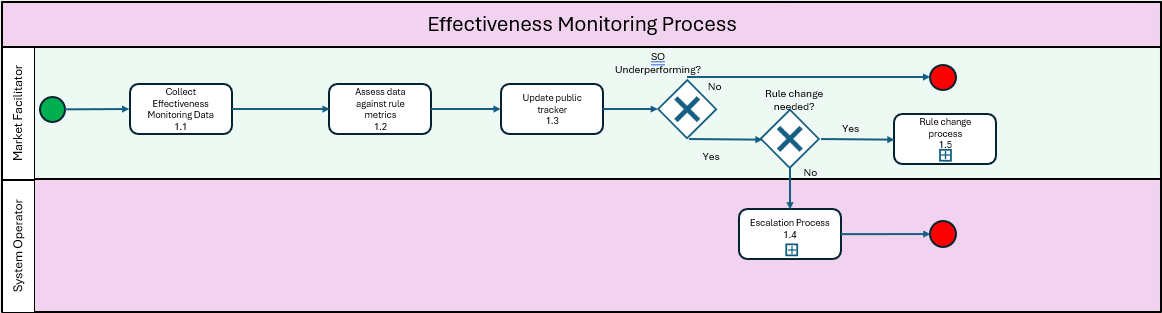
Figure 7: Effectiveness Monitoring Process
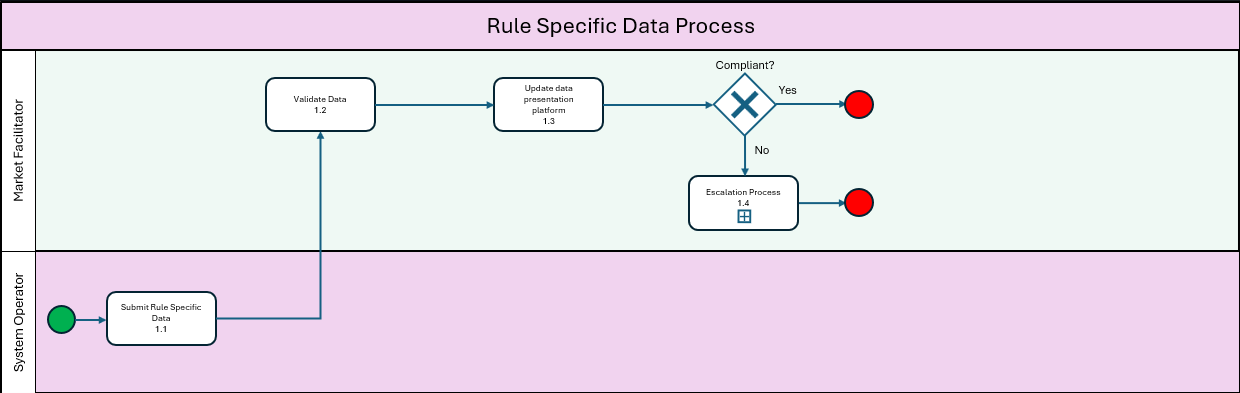
This process sets out the requirements for the submission, handling, and use of rule-specific data collected under Flexibility Market Rules.
Rule-specific data collection applies where a Flexibility Market Rule requires the submission of ongoing operational datasets to support monitoring, analysis, and transparency of market activity.
System Operators must provide the Market Facilitator with the data set out in the applicable Flexibility Market Rule in accordance with the requirements specified in that Rule.
Data must be submitted at the frequency and within the timelines specified in the relevant Flexibility Market Rule.
Where the Market Facilitator identifies that information submitted by a System Operator is incomplete, inconsistent with the standard schema, or otherwise not aligned with the relevant Flexibility Market Rule, it shall engage with the System Operator to clarify or resolve the issue in accordance with paragraph 3.3.
System Operators shall notify the Market Facilitator where they consider that they may be unable to meet the standard schema or any requirement relating to rule-specific data under the relevant Flexibility Market Rule and shall provide the information necessary to support such notification. Any material deviations that indicate a risk to Flexibility Market Rule implementation or compliance may inform Implementation Tracking, Effectiveness Monitoring, or the Escalation process, as appropriate.
This process does not prevent the submission of data at a higher frequency than the minimum requirements specified in the relevant Flexibility Market Rule, where such data is available.
None Used
A master list of definitions can be found in the Market Facilitator Glossary.
The following definitions are specific to this Governance Document. These are supplemented by the definitions in the Market Facilitator Glossary. If there is an inconsistency between definitions, the definition in this document shall prevail.
FGD: Implementation Monitoring Procedure - Amendment record
Annex 1: Associated meta-data
Register / log in for extra features
Save documents and get notified when they change, access AI overviews in search.
1.1
The Publish Date and the Implementation Date for this Governance Document are as follows:
Term
Date
Publish Date
25 August 2026
Implementation Date
31 March 2027