This section is provided as guidance to the Flexibility Market Rule. Therefore, it is not legally binding and falls outside of the formal change management process.
Context
The purpose of this rule is to introduce standardised baselining methodologies and processes to Distribution Network Operator (DNO) markets. Baselines set the level from which performance is calculated, and so are a key element of the commercial proposition for flexibility services.
Baselining Requirements
This Flexibility Market Rule specifies the allowed baselining techniques for DNO markets. These include:
Asset Capacity (set by the capacity of the asset),
Fixed Reference (based on standardised view of such an asset),
Zero, and
Nomination (set by the FSP).
The rule sets one of these as the Default Baselining Methodology (DBM) based on:
Whether the site is domestic or an Industrial & Commercial site;
Whether the metered point is Point of Connection or at the Asset;
The technology type; and
Direction of the service being offered (i.e. Demand Turn Down/Generation Turn Up or Demand Turn Up/Generation Turn Down).
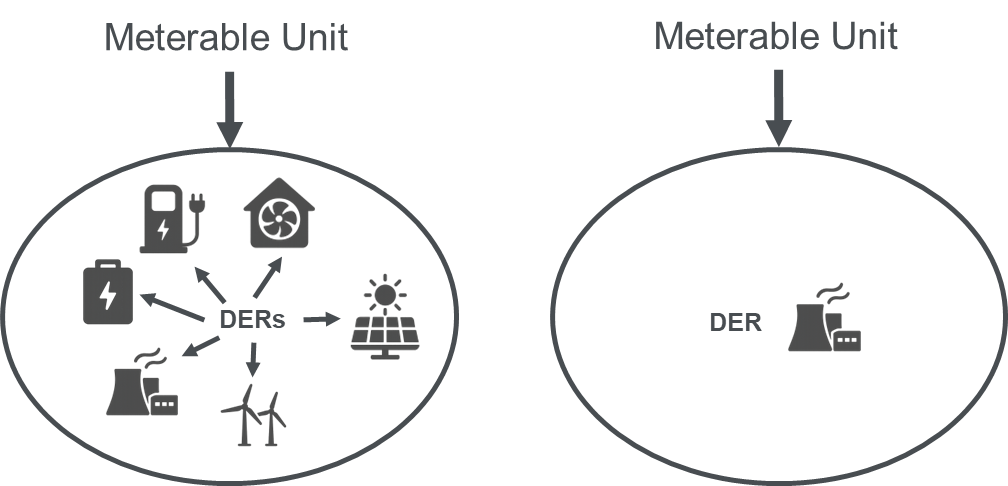
Individual Assets can be combined into Meterable Units and an aggregated baseline is provided. Default Baseline Methodologies that are non-Nomination type cannot be combined with Nomination type baselines.
An Alternative Baselining Methodology (ABM) process is available where sites and Assets have atypical characteristics or operational behaviours, or a provider wants to combine a non-Nomination and a Nomination Default Baselining Methodology into a Meterable Unit. The DNO must approve this request.
We believe the impact of these requirements to be:
Impact on System Operators | Impact on FSPs |
|---|
DNOs must use this methodology to determine baselines. This includes setting out Fixed Reference Baseline values as required for each DBM. They also need to develop a process for the ABM requirements. This includes accepting, processing and analysing applications; publishing key deadlines; notification to applicant of decision to approve or reject; report to Market Facilitator number of approved ABMs approved. Finally, to support Nomination Baselines, they need to develop a process for the Nomination Baseline justification requirements. This includes accepting, processing and analysing Nomination justifications; notification to applicant of decision to approve or reject; instigating a Nomination Performance Review and reporting volumes to Market Facilitator. They also need to develop a process to assess the accuracy of the Nomination Baseline for both Net % and Absolute % Error as per the requirements of this rule; report results to the Market Facilitator. | The new baselining methodology will be used to assess the performance of FSPs. As such they must understand what baselining will be used for their assets. They must also adhere to the limitations surrounding to the components of meterable units for certain baselining combinations. Finally, where Nomination Baselines are used they must develop a process to determine a Nomination baseline in line with the principles of good industry practice as laid out in this rule; and participate in Nomination Performance Reviews as required. |
Implementation monitoring requirements
The key requirements are laid out below. A view across the rules is available in our deadline tracker.
Category | Requirement | Trigger for data submission | What we will do with it |
|---|
Implementation tracking | Basic tracking of implementation status and target date | From 14/01/2026 (20 working days after the published date). Within 10 days of change | Track whether implementation is on track via our Implementation tracker. |
Flexibility Market Catalogue data | Confirmation of use of standardised methodologies and associated processes | From 01/04/2026. Within 10 days of change | Provide an overview of the sub-market and the market as a whole via the Flexibility Market Catalogue. |
Effectiveness monitoring data | Monitoring of ABM requests; Nomination baseline accuracy; number of performance reviews | Every 3 months | Track the effectiveness of the DBM against number of ABM requests; and of nomination methodology process and performance of parties. Tracked via our Effectiveness Monitoring Report |
Derogations against this rule
The following derogations are in place:
Who | What | For how long | Why |
|---|
SSEN | The full requirements | Until 01/07/2026 | To allow for robust implementation |
SSEN | The full requirements for LMA Interim Payment Service | Until 01/02/2027 | To prevent blockers to LMA Interim Service settlement |
NGED | Sections 2.2, 2.3, 2.4 and 2.6 | Until 31/03/2027 | To allow for robust implementation and initiation of Change Process |
0.0
Sections 1, 2, 3 and 4 form the legally binding Flexibility Market Rule.
Defined terms capitalised in this document shall have the meaning given in Section 4.